Carlsberg's 'hydration break' jab spotlights growing corporate rift over FIFA stake sale
By Sanskriti Shekhar and Juveria Tabassum
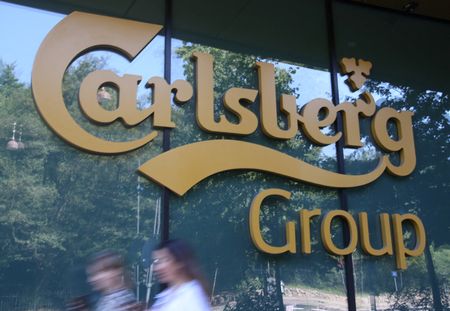
July 31 (Reuters) - Danish brewer Carlsberg's jab at FIFA President Gianni Infantino highlighted how a growing backlash against the governing body's proposed stake sale is spilling into the corporate sector, even as many sponsors are likely to see it as beneficial to them.
The company on Friday posted a tongue-in-cheek message on Instagram referencing the hydration breaks introduced at this year's World Cup, a move that critics said was a way to create additional advertising opportunities.
"Time for a hydration break, Gianni? Probably," Carlsberg wrote in a post, a play on its long-running slogan, "Probably the best beer in the world."
FIFA did not immediately respond to a request for comment on the social media post.
Carlsberg is not a FIFA sponsor but has a sponsorship agreement with European soccer body UEFA, which has voted to boycott FIFA competitions unless Infantino abandons his plan to create a $20 billion subsidiary and sell minority stakes to outside investors.
The growing row has put Infantino's plans under pressure. A senior adviser resigned on Friday in protest, calling the proposal "a bad deal for football", while UEFA and regional confederations have united in opposition.
Despite the backlash from football authorities, FIFA's plan to sell a minority stake in a new commercial entity could give key sponsors such as Coca-Cola, Adidas and Visa a fresh way to reach fans, though branding experts warn the move risks over-commercializing the sport.
On Tuesday, FIFA proposed creating a unit to oversee the commercial and event operations of the World Cup and its other competitions, offering stakes of up to 20% to external investors led by Joshua Kushner's Thrive Capital.
UPSIDE FOR SPONSORS
Private equity investment could help FIFA develop new sponsorship categories, digital products and direct-to-consumer initiatives while increasing the commercial value of tournaments beyond the men's World Cup, said Mauricio Rios, a sports business advisor at Global Field Sports Consulting.
Coca-Cola, which has been the World Cup's official beverage partner since 1978, declined to comment on FIFA's proposed stake sale.
Earlier this week, Coca-Cola's finance chief John Murphy said the company was pleased with the boost that hydration breaks provided to its energy drinks sales.
Adidas CEO Bjorn Gulden said on Thursday his company was not involved in FIFA's plan. The company is a top-tier official FIFA partner and supplies the official match ball and outfits for tournament volunteers and officials.
"I do not fully understand what the proposal is and I'm not qualified to comment on it," he said.
"Most global sponsors will probably see upside in better commercial execution and audience growth. But they will also be asking who is really in control," said Lauren Anderson, director of the Warsaw Sports Business Center at University of Oregon's Lundquist College of Business.
COMMERCIALIZATION FEARS RISE
The biggest risk for sponsors, experts said, is over-commercialization.
Investors focused on returns could push for more matches and more advertising, potentially diluting the exclusivity that makes FIFA rights valuable.
"For sponsors who built brands on authentic proximity to the game - Adidas, Coca-Cola, Nike, Visa - that's a problem," Daniel Binns, global CEO of branding consultancy Elmwood.
"It's the moment football's soul goes on the balance sheet."
(Reporting by Sanskriti Shekhar and Juveria Tabassum in Bengaluru and Stine Jacobsen in Copenhagen; Writing by Aishwarya Venugopal; Editing by Arun Koyyur)
Find it fast
Looking for more insights? Explore our other news sections for updates on sustainable finance, companies and financial education