Traders stick with ECB rate-hike bets as oil touches $100 once more
By Yoruk Bahceli and Sophie Kiderlin
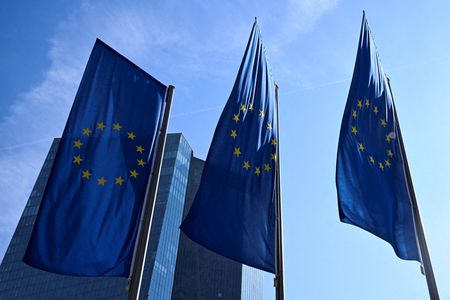
LONDON, July 23 (Reuters) - Traders stuck to their bets that the European Central Bank will resume rate hikes from September on Thursday as oil prices hit $100, reinforcing that policy will likely need further tightening to combat inflationary risks.
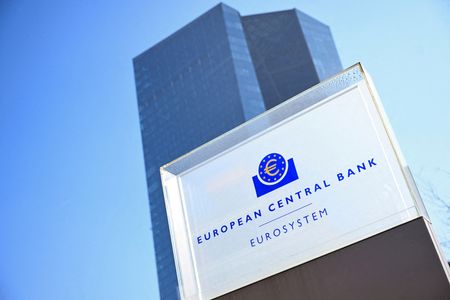
The ECB kept interest rates unchanged as expected on Thursday but held the door open to another increase in September, as a fresh jump in energy prices threatened to keep inflation well above its 2% target.
While the decision was unanimous, some policymakers questioned whether a hike should be considered already on Thursday, ECB chief Christine Lagarde said.
And just as she spoke to journalists following the bank's decision, oil prices touched $100 for the first time in nearly two months, adding to their sharp rise this month.
They rose for a fifth day after Yemen's Houthis said they struck two Saudi oil tankers, widening disruption to global oil shipping through both the Red Sea and the Strait of Hormuz as the Iran war escalates.
"The fact that the market is pricing fully a rate hike for September is warranted by what we see on the energy prices. And we would really need a steep fall in the oil price for them not to deliver it," said Laureline Renaud-Chatelain, fixed income strategy lead at Pictet Wealth Management.
Markets continued to price around a 95% chance of a 25 basis-point ECB rate hike in September, and a similar probability of a further move by December, in line with expectations before the ECB's decision.
That gave little respite to battered bonds, with yields near multi-year highs.
"The market moves are predominantly being centered on the oil price dynamics today," said Laura Cooper, head of macro credit at Nuveen.
Germany's 10-year yield, the benchmark for the euro area, was up 3 basis points to 3.20%, holding at a 15-year high it touched earlier on Thursday.
The 2-year yield, which is sensitive to interest rate expectations, was up similarly to 2.88%, remaining just shy of a two-year high it touched earlier on.
The euro dropped almost 0.4% to $1.1364, its lowest since July 1, even as traders stood pat on their rate hike bets, highlighting the bloc's energy dependency.
Europe's broad STOXX 600 share index was last down 1.1%.
WHAT COMES NEXT?
With traders and economists in agreement that the ECB will hike rates in September, the question is what it will do after that.
Analysts do not share traders' expectations for moves after September and Thursday's meeting provided little clarity as energy price uncertainty will continue to dominate the outlook.
"The problem is it is too early to judge the extent of the second-round effects," said Susannah Streeter, chief investment strategist at Wealth Club in London.
Lagarde said the ECB was not seeing signs that inflation is broadening out through the broader economy via wage-setting yet.
"September could potentially be an insurance hike" to contain inflation expectations, Nuveen's Cooper said. "But we're not seeing any guidance that they (ECB policymakers) would want to further tighten rates beyond that potential move," she said.
The ECB meeting comes ahead of other key central bank meetings with the U.S. Federal Reserve, Bank of Japan and Bank of England meeting next week.
(Reporting by Sophie Kiderlin and Yoruk Bahceli; Editing by Dhara Ranasinghe and Jon Boyle)
Find it fast
Looking for more insights? Explore our other news sections for updates on sustainable finance, companies and financial education