Analysis-Europe's tech 'liberation day'? Computer says not yet
By Toby Sterling
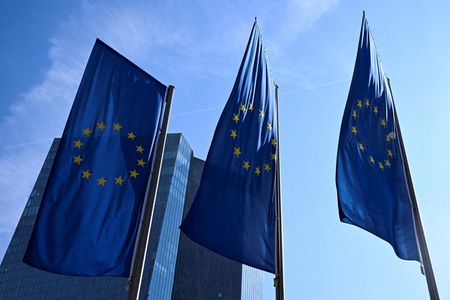
AMSTERDAM, June 4 (Reuters) - As the European Union unveiled its technology sovereignty package on Wednesday, a top official posted in glee: "Today is Tech Liberation Day". True technological independence from U.S. Big Tech, however, will take longer to attain.
The EU plan aims to boost European tech firms and limit some access for dominant U.S. rivals. It marks a key but initial step, with the bloc trailing far behind the U.S. and Asia on AI, chips, cloud services and data centres.
Ralf Wintergerst, president of German digital industry group Bitkom, said measures like the proposed Chips Act 2.0 were a "step in right direction", but Europe needed concrete action and a better investment environment from chips to AI infrastructure.
"It is now crucial that these efforts do not stop at mere announcements. Europe needs to move quickly," he said.
EU tech chief Henna Virkkunen presented the package that restricts U.S. giants like Amazon , Microsoft and Google from the most sensitive cloud tenders, while encouraging a quick build-out of data centres that use at least some European hardware or software.
On chips, the plan is less about luring leading-edge plants and more about supporting existing strengths around leading chip equipment maker ASML from materials to advanced packaging, while using public demand to help startups scale.
But with few regional champions, cutting reliance is not going to happen quickly. The bloc has no European version of Nvidia to design AI chips, no rival to Taiwan's TSMC to manufacture them, and no software giants comparable with the big U.S. firms able to drive demand through vast cloud platforms.
"We will continue to rely on Nvidia and AMD for GPUs and will need to cooperate with international partners on certain AI models. This is not a weakness, but realism," said Achim Weiß, CEO of German cloud provider Ionos.
"It must be clear that sovereignty does not mean self-sufficiency."
EU NEEDS TO ATTRACT INVESTMENT, NOT SHUT IT OUT
The EU plan also contains little new money, especially compared with huge U.S. investment and Chinese industrial support. That leaves the bill to member states already under budget pressure, while companies face high energy costs, labour shortages and fragmented capital markets.
"Europe cannot regulate its way into semiconductor leadership", said Erik Rein, head of European chipmaker association ESIA, who also heads Bosch's semiconductor business.
Mitchell Rutledge, Europe Policy Manager at the Computer & Communications Industry Association, said a focus on data centre capacity was good but Europe needed to be attracting investment, "not shutting it out".
A Microsoft spokesperson said the firm shared the EU's ambition to strengthen technological sovereignty and global competitiveness in AI, but called for an open market with "fair competition".
Wolfgang Weber, managing director of ZVEI, the German electrical and digital industry group, praised plans for faster approvals of strategic tech projects that require state aid, though he said Europe couldn't "force the issue".
"Europe achieves sovereignty through its own strength, not through barriers," he said.
WILL MEASURES MAKE CAPITALS BUY EUROPEAN?
The final European Commission package also stopped short of a hard "Buy European" approach, which left some critics saying it had not gone far enough.
"I am sceptical that this will be sufficient to ensure long term independence from the U.S.," said Greens/EFA European parliament member Kim van Sparrentak.
"This long delayed package finally recognises the scale of Europe's digital dependency, but ultimately falls short."
Some pointed to the balance the measures struck - realistic small steps towards a longer-term ambition.
"The package frames tech sovereignty in a more pragmatic way than previous debates often did," Julia Hess of interface, a German technology policy think-tank, told Reuters.
Tony Blair Institute's Director of Science & Technology, Keegan McBride, said the package was an important step, though he cautioned a retreat into a Europe-first approach would leave the continent weaker.
"Europe can't regulate its way to competitiveness, it must build," he said. "There's still much more to do if Europe wants to close the gap with the U.S. and China."
(Reporting by Toby Sterling, Yun Chee Foo and Hakan Ersen; Editing by Adam Jourdan and Daniel Wallis)
Find it fast
Looking for more insights? Explore our other news sections for updates on sustainable finance, companies and financial education