Explainer-Why is Burnham unwinding the UK's 'triple lock' state pension pledge?
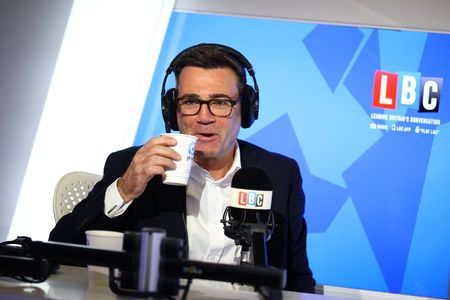
MANCHESTER, England, Sept 29 (Reuters) - British Prime Minister Andy Burnham committed on Tuesday to the biggest reform of the state pension system in more than a decade by pledging to unwind the "triple lock" guarantee — long regarded as untouchable by party leaders.
The change will not take effect until April 2030, after the next national election, meaning Burnham avoids breaking a manifesto pledge by his centre-left Labour Party to protect the triple lock for the duration of this parliament. The savings will instead help fund a new National Care Service.
WHAT IS THE TRIPLE LOCK AND WHY IS HE DITCHING IT?
The triple lock, introduced in 2011, has increased the state pension each year by whatever is highest out of inflation, average earnings or 2.5%.
While popular among older voters, it has become an enormous liability for Britain's stretched public finances.
In July, the Office for Budget Responsibility singled out the triple lock as a big reason why state pension spending was projected to increase from 5% of economic output to 9% in future decades.
Economists have long called for reforms to the triple lock but political leaders have feared a possible backlash from voters.
WHAT WILL CHANGE?
From 2030, if Labour wins the next election, Burnham said the pension would continue to rise every year by at least the rate of inflation or by 2.5% and would maintain its value relative to earnings over time, "so that pensioners will always share in the rising prosperity of the nation".
Burnham said low-income pensioners would not pay income tax during the current parliament and added that the proposed changes meant that pensioners in the future would receive a state pension that rises every year and face no care charges, while generating significant savings for Britain to build up a national care service.
WHAT WILL IT SAVE?
The Labour Party said the reform would save £15 billion ($20 billion) a year by the end of the 2030s, rising to £50 billion a year by 2050.
The Institute for Fiscal Studies think tank said the savings were likely to be much smaller initially — and difficult to predict given that the triple lock depends on wider economic conditions — but they would compound in future years.
To give an example, the institute said if Burnham's proposed reform had been in force since 2011, state pension expenditure would be £9 billion lower than it is now, more than halving the current £16 billion per year cost.
Financial markets showed little immediate reaction, given that Burnham said the savings would be ploughed into a new National Care Service, designed to alleviate chronic pressure on Britain's social care system for elderly citizens.
The IFS said savings from the state pension reform would be insufficient on their own to fund the proposed care service — raising the prospect of tax hikes or spending cuts.
WHAT IS THE POLITICAL FALLOUT?
A poll for the I newspaper published on Tuesday — conducted by BMG Research before Burnham's speech — showed that support among Britons for keeping the triple lock stood at 53%, while only 13% were in favour of ditching it.
Labour says it is not breaching its 2024 election manifesto pledge to retain the triple lock as the reform will come in after the next election, due by mid-2029 at the latest.
While the populist Reform UK and the official opposition centre-right Conservative Party have pledged to keep the triple lock, Burnham also faces critics from the left.
Sharon Graham, the leader of the Unite trade union, told the BBC she would prefer a wealth tax. Zack Polanski, leader of the Green Party, asked why the government was going after pensioners instead of taxing the rich.
($1 = 0.7560 pounds)
(Reporting by Andy Bruce; Editing by Kate Holton and Alison Williams)
Find it fast
Looking for more insights? Explore our other news sections for updates on sustainable finance, companies and financial education