As fashion stumbles, jewellery will help shape luxury's winners
By Dominique Patton and Lisa Jucca
PARIS, July 27 (Reuters) - As luxury groups grapple with weak fashion sales and a hit to spending from the Middle East conflict, investors are increasingly focused on one question: who sells enough jewels?
The answer may help determine the $400 billion industry's next winners and losers.
The luxury goods sector was expected to return to growth in 2026 after contracting for two consecutive years, but the conflict was still curtailing spending in the first quarter and the impact is set to be greater in the three months to June, industry analysts say.
Leather bags, a traditional driver of profitability, are not offering enough support, viewed as too pricey and unattractive to younger consumers. But jewellery is doing better.
While still representing a relatively modest share of sales for most luxury players, the segment "punches well above its weight" in terms of steady growth and stronger margins, Vontobel analysts said earlier this year.
GOLD RALLY 'ADDS TO APPEAL'
Interest in the category was piqued as shoppers began to tire of a lack of innovation in high-end fashion during a period of designer changes, and a rally in gold has added to its appeal as an investment, said Carole Madjo, head of European luxury research at Barclays.
"All these points combined together were making jewellery a bit more attractive compared to soft luxury," she said.
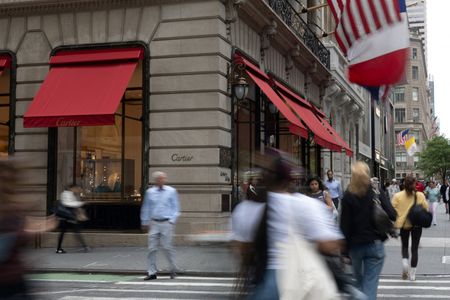
Sales of jewellery at Cartier and Van Cleef & Arpels owner Richemont soared by 24% in the quarter to June 30, far outpacing analyst estimates.
LVMH, owner of Bulgari and Tiffany, is also expected to improve its hard luxury sales.
Barclays analysts last month raised growth expectations for its Watches and Jewellery division from 7% to 8% for 2026, well above the 3% growth it posted last year. The division, LVMH's third largest, accounted for 13% of its €81 billion turnover in 2025.
LVMH reports second-quarter sales on Monday, Gucci owner Kering on Tuesday, and Hermes on Wednesday.
JEWELLERY DRIVES INNOVATION
While Richemont and LVMH own the largest jewellery brands, smaller labels are doing well too, prompting renewed interest by traditional fashion-focused players.
Kering, owner of Pomellato and Boucheron, said in April sales of its new jewellery division grew 22% on a comparable basis in the first quarter, outperforming all other segments.
Hermes' jewellery segment has shown a compound annual growth rate of almost 30% since 2019, according to Vontobel analysts, albeit from a very small base.
"Even at soft luxury players like Hermes, Prada, Gucci, everybody's putting a bit more emphasis on jewellery because that's where the growth is coming from right now. So you want to be exposed to that," Madjo said.
BAGS AND SHOES LOSE FAVOUR
The switch in consumer focus to jewellery from items such as high-end bags and shoes could pose a challenge for players like Hermes, whose global appeal has long rested on its tightly controlled Birkin bag franchise.
Its stock fell about 10% after it missed first-quarter growth estimates, raising questions about the strength of its scarcity-driven model.
"Bags and shoes are facing meaningful headwinds, as both have experienced significant softening in consumer desirability, particularly among younger audiences," said Claudia D'Arpizio, senior partner at consultancy Bain & Company.
"These categories, especially bags, have historically been strong contributors to revenues and margin growth; however, post-COVID dynamics have created a more challenging environment. So players need to find a winning formula for these."
(Reporting by Dominique Patton and Lisa Jucca; Additional reporting by Alessandro Parodi; Editing by Jan Harvey)
Find it fast
Looking for more insights? Explore our other news sections for updates on sustainable finance, companies and financial education