Bailey defends BoE decision to reduce gilt holdings
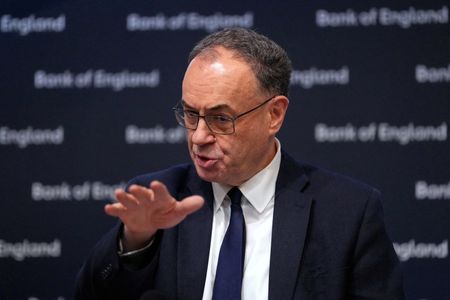
June 15 (Reuters) - Bank of England Governor Andrew Bailey on Sunday defended the central bank's decision to reduce its holdings of British government bonds, saying the move would restore its capacity to intervene in the future if needed.
Writing in The Times, Bailey said the BoE's past purchases of government debt, known as quantitative easing (QE), had been crucial in supporting the economy during the global financial crisis and the COVID-19 pandemic. With those crises past, he said it was appropriate to reverse the policy.
"Many of those who now criticise QE were not saying as much at the time," he wrote.
The central bank is now reducing its stock of gilts through quantitative tightening (QT). Bailey said that the overall cost of the bank's QE and QT operations is broadly neutral.
Reform UK leader Nigel Farage and Bailey have previously had disagreements centering around the BoE's handling of bond sales and a lack of businesspeople on its rate-setting Monetary Policy Committee.
In the newspaper article, Bailey pushed back against criticism that selling bonds locks in losses, arguing that whether gilts are sold or held to maturity does not change the overall financial impact.
"Monetary policy and financial stability are important for the people of the UK and it is important that we have the tools to do it right," he wrote.
(Reporting by Ruchika Khanna in Bengaluru; Editing by Thomas Derpinghaus)
Find it fast
Looking for more insights? Explore our other news sections for updates on sustainable finance, companies and financial education