Britain's finance minister hikes bank tax to 6%, less than lenders feared
By Lawrence White
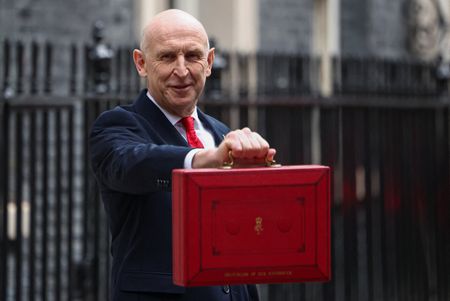
LONDON, Oct 28 (Reuters) - Britain is to double a tax surcharge on banks to 6% for 15 months, finance minister John Healey said on Wednesday as part of his first budget, a rise that was less than feared and sparked a rally in banking stocks.
The tax hike comes via an increase in the surcharge banks pay on profits above a set threshold from 3% to 6%, partially reversing a cut from 8% three years ago under then-Prime Minister Rishi Sunak.
The hike will be temporary and last for 15 months, and will raise £1.5 billion in total, according to estimates by the finance ministry.
The banking industry had lobbied hard against any increase, arguing it could curb lending, but Healey said it would help British people cope with the challenging economic environment.
"Amid global economic storms, I am looking to our banks to help fund breathing space for British families," he told parliament.
Shares in HSBC, Barclays, Lloyds Banking Group and NatWest <NWG.L rallied after Healey's announcement, with Barclays, NatWest and Lloyds up more than 2%.
"The fixed end date matters as much as the size, because it turns a potential reset of bank earnings into a one-off charge, and investors appear to be reading it as a bump rather than lasting damage to their earnings base,' said Angeline Ong, analyst at investing and trading platform IG.
Big British lenders have reported bumper profits in recent years, fuelled by favourable interest rates, which boosted lending income.
UK Finance, the industry lobby group, has said Britain already taxes banks higher than in other major financial centres. It estimated in a report this month that the UK banking sector paid £25.7 billion in direct taxation in the year to end-March.
Bank profits will now be taxed temporarily at a total rate including corporation tax of 31%, following the new surcharge.
British trade unions had lobbied for an even bigger tax hike, citing fairness and banks' record profits.
(Reporting by Lawrence White; Editing by Tommy Reggiori Wilkes)
Find it fast
Looking for more insights? Explore our other news sections for updates on sustainable finance, companies and financial education